


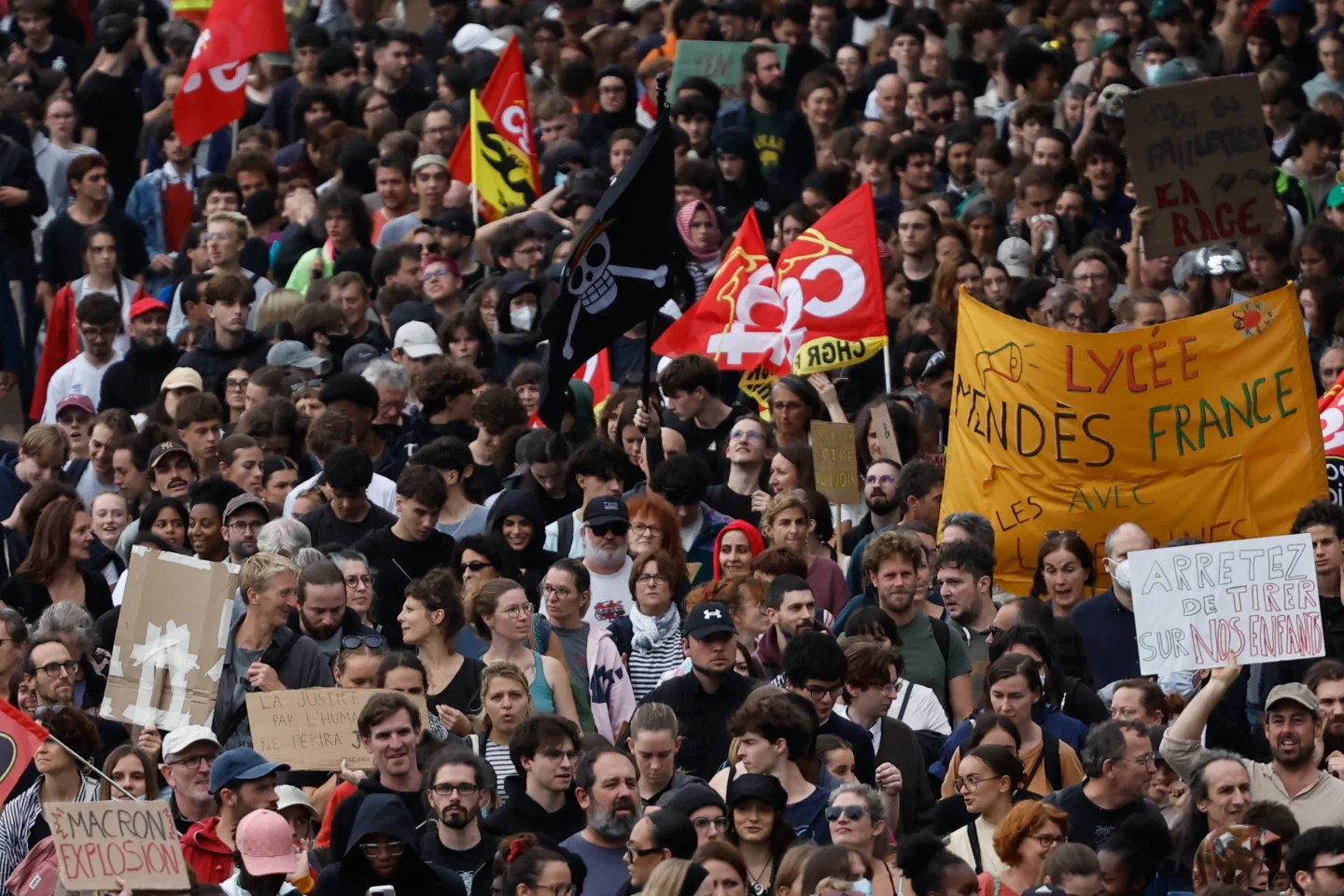
France’s football ethics body has urged supporters to keep political messages out of stadiums as student protests continue across the country. The appeal, reported by the Associated Press on October 15, 2026, follows demonstrations against school conditions and police conduct. Fans at some Ligue 1 matches have displayed banners criticising the police response, bringing the wider social debate into professional football.
The Conseil national de l’Éthique et de Déontologie, which deals with ethics and conduct within French football, acknowledged that supporters may have strong feelings about events outside sport. However, it argued that stadiums should remain places where people can gather to watch matches without political or ideological messages becoming the focus. The body referred to rules in national and international sport that limit political expression during competitions.
The call comes amid a wider wave of student protests. Young people have raised concerns about school buildings, staff shortages and the quality of public education. Demonstrations have also been shaped by anger over the police response, including the use of crowd-control weapons and reports of injuries. Supporters have used football matches to show solidarity with students and criticise authorities, turning some stadiums into platforms for public debate.
Football officials face a difficult balance. Sporting organisations often seek to keep competitions separate from political disputes, arguing that matches should be welcoming to supporters with different beliefs. But stadiums are also public spaces where large groups of people express identity, solidarity and frustration. Attempts to restrict political messages can therefore create further disagreement about freedom of expression and the role of sport in society.
The ethics body’s position is based on the idea that football should provide a shared experience focused on the game. Supporters, however, may argue that sport cannot be completely separated from society, especially when events affect young people, schools and public safety. Banners and chants can be a way for fans to express concerns, even if the messages go beyond the match itself.
The issue also raises questions about how rules are applied. Clubs and competition organisers must decide whether a banner breaks regulations and what response is appropriate. Heavy-handed action could lead to criticism, while allowing political messages may encourage further protests in stadiums. Clear, consistent rules are important if authorities want to avoid accusations of favouritism.
The protests have put pressure on public institutions to respond to student concerns. Football’s ethics body has chosen to focus on the stadium as a place for sport, but the debate is unlikely to end with its statement. Fans may continue to use matches to show their views, while clubs and officials will have to decide how to handle such displays.
For French football, the challenge is to maintain a safe and inclusive environment without ignoring the fact that supporters are also members of wider communities. The coming weeks may show whether the call for political neutrality reduces stadium protests or adds another point of disagreement to an already tense national debate.
