


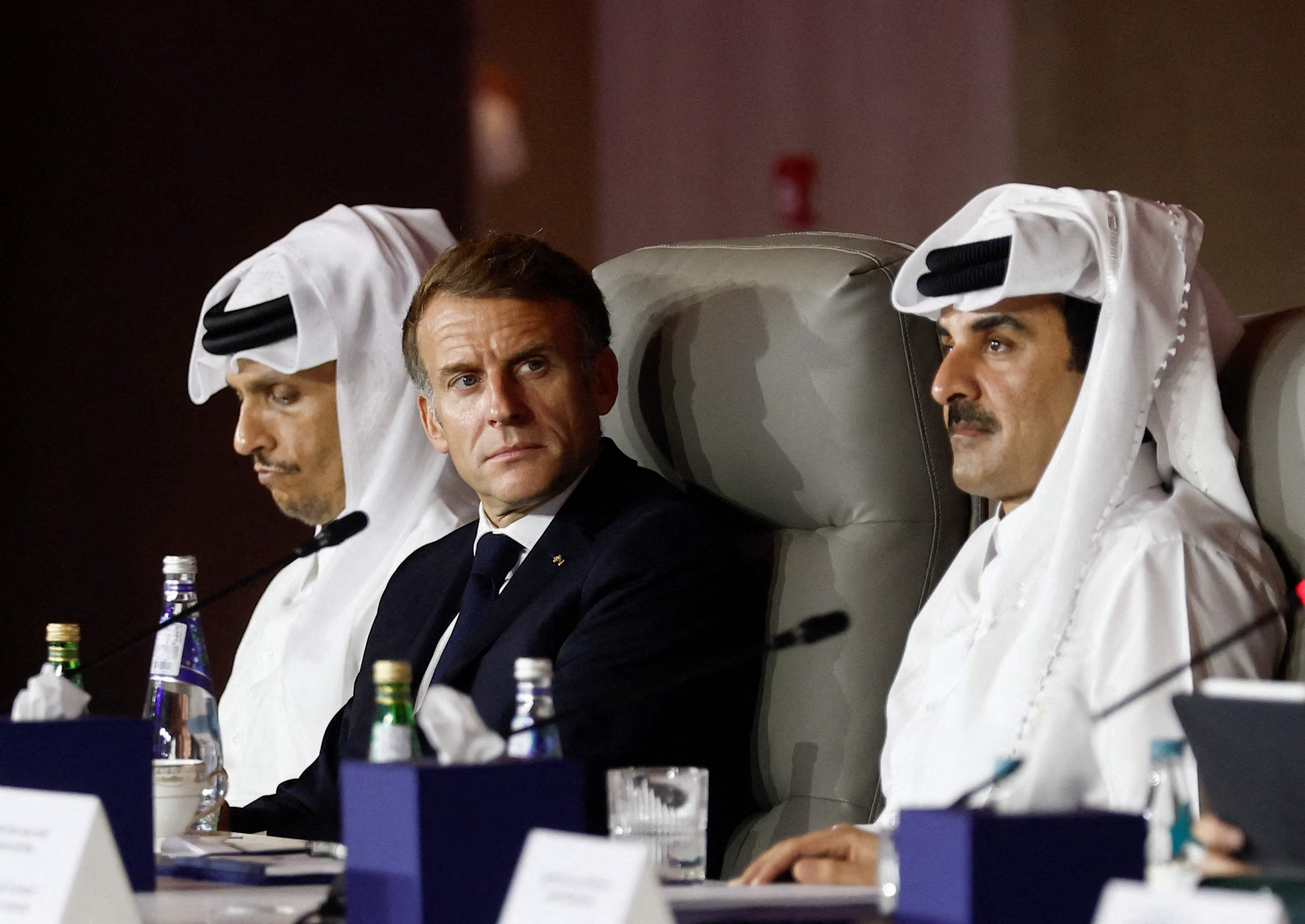
French President Emmanuel Macron is facing criticism at home as he visits Gulf countries during a period of political unrest. His three-day tour includes Kuwait, Bahrain, the United Arab Emirates, Qatar, and Saudi Arabia. The visit aims to strengthen France’s ties with key regional partners and help secure energy supplies. But the timing has raised questions about the president’s priorities while protests and violence continue to trouble French cities.
The trip comes after serious clashes during demonstrations on October 17. The unrest has become a major political issue, with critics questioning the government’s ability to maintain public order. Some political figures have argued that Macron should have postponed his visit and remained in France to oversee the response. Others have focused on the need for a stronger security plan and clearer action to address public anger.
Former president François Hollande and former prime minister Édouard Philippe were among those who criticised Macron’s decision to travel abroad during the crisis. Their concerns reflect a wider debate over leadership at a time when the government faces pressure from different parts of the political spectrum. Macron has defended his choice, saying the trip is important for France’s international interests and does not prevent him from staying in contact with officials at home.
The president is reported to be maintaining regular contact with senior members of his government during the tour. A security meeting is also planned after his return. These steps are intended to show that he remains involved in the domestic response despite being abroad. Still, critics say that public confidence depends not only on private discussions but also on visible leadership when a national crisis unfolds.
Energy security is one of the central goals of the visit. France is seeking reliable supplies of fuel as global energy markets face fresh pressure. The discussions include plans involving diesel shipments and liquefied natural gas from Qatar. Reports have referred to a proposed supply of 300,000 metric tons of diesel and two terawatt-hours of Qatari liquefied natural gas each month. If confirmed and carried out, such arrangements could help France manage supply needs during a period of uncertainty.
The Gulf tour also has a wider diplomatic purpose. France wants to maintain close ties with countries that play a major role in energy markets and regional security. Leaders in the Gulf can influence trade, investment, and efforts to reduce tensions across the Middle East. For Paris, stronger links with these states may offer economic benefits and create more options for dealing with international crises.
Yet the trip comes with risks. Tensions involving Iran and other regional actors could affect energy arrangements and the wider security situation. Any supply deal must be judged against its practical terms, cost, and reliability. A diplomatic visit can open doors, but it cannot guarantee that all promised supplies will arrive as planned or that regional tensions will ease.
At home, the government must still deal with the causes and effects of the unrest. Residents want safe streets, businesses need to operate without fear of damage, and public services face demands for more support. The protests have also renewed debate about living costs, police conduct, and the government’s response to social pressure. These issues will remain important after Macron returns.
The visit highlights the difficult balance between domestic duties and international diplomacy. Macron argues that France cannot ignore its energy and foreign policy needs during a political crisis. His critics say the timing risks sending the wrong message to people who want direct action at home. The success of the trip will therefore be judged not only by its diplomatic results but also by whether the government can restore calm and respond to public concerns in France.
