


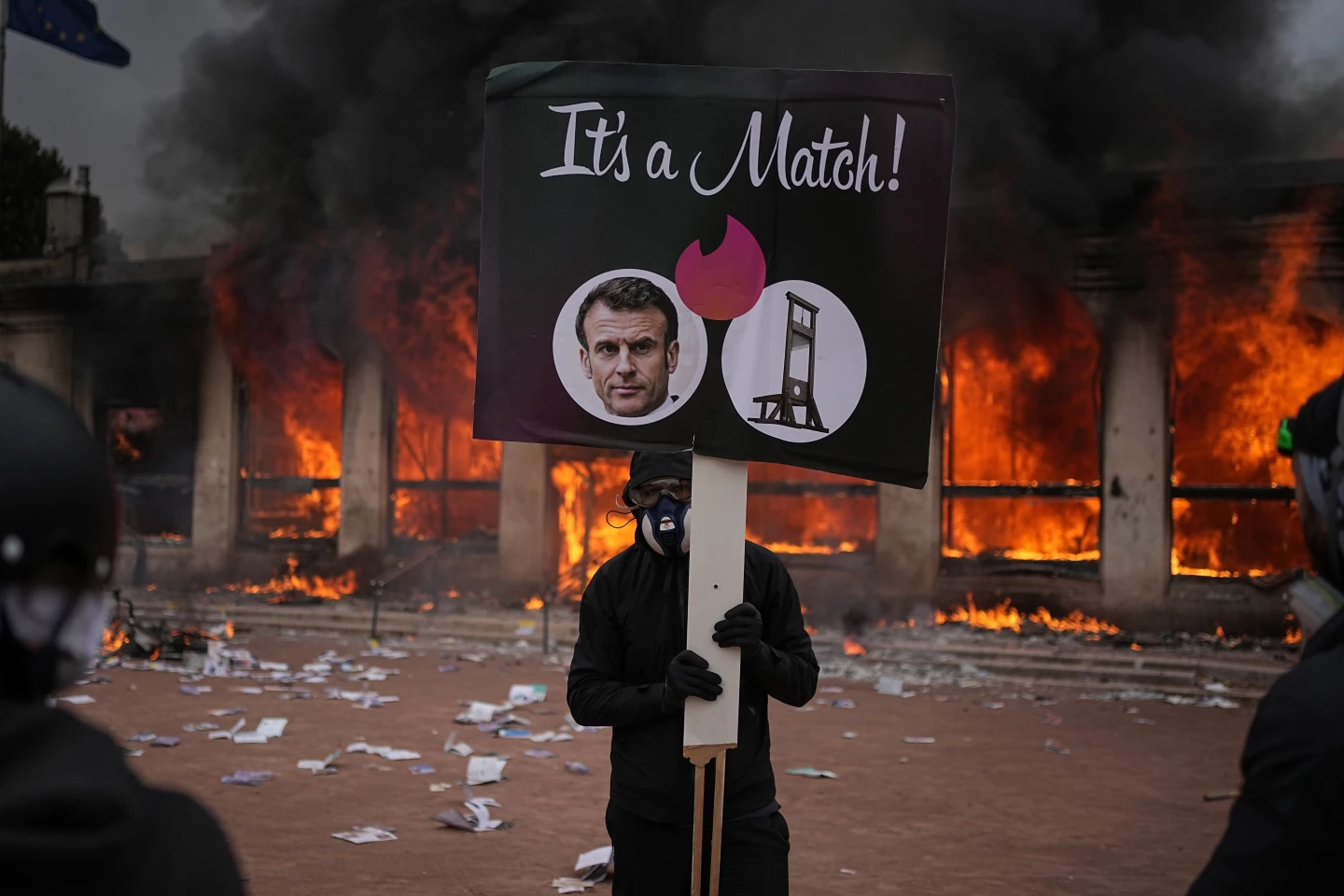
France’s latest wave of protests and riots is becoming a major issue in the political contest ahead of the 2027 presidential election. President Emmanuel Macron is nearing the end of his time in office and cannot seek a third term under the country’s constitutional rules. As public anger grows, possible successors are using the crisis to present their own plans for security, wages, and public services.
The unrest has placed Macron under pressure. His popularity has fallen, and critics from both the far right and the far left have questioned how his government has handled the situation. The violent incidents have included clashes with police, damage to property, and disorder in urban areas. The events have also raised concern about whether the authorities can prevent further violence while protecting peaceful protest.
Marine Le Pen and her political allies have made public safety a central part of their message. The National Rally has called for tougher penalties for people convicted of rioting and more resources for police. The party argues that stronger action is needed to restore order and reassure residents who fear further violence. Its position may appeal to voters who see security as the most urgent issue facing the country.
On the left, Jean-Luc Mélenchon has expressed support for demands linked to wages and public services while condemning violence. His approach seeks to connect the protests to wider concerns about living standards and the role of the state. It also presents a challenge: voters may agree with calls for better public services but remain worried about the damage caused by violent acts. The balance between social reform and public order could shape how the message is received.
The debate reflects deeper concerns in French society. Rising living costs can leave families with less money for food, housing, travel, and other needs. Public services also affect daily life, from school conditions to access to local support. When people believe that political leaders are not responding to these problems, anger can grow. Protests provide a way to express that anger, but violence can weaken public support for the demands behind them.
The government has promised to prevent a repeat of the worst violence. Officials must prepare for planned demonstrations and protect public spaces without treating every protester as a threat. Police face the difficult task of responding to unlawful acts while respecting the right to peaceful assembly. Any failure can become a political issue, especially when public trust in institutions is already under strain.
The presidential contest is expected to become more intense as candidates seek to turn the crisis into support. Security, the cost of living, and public services are likely to feature heavily in campaign debates. Yet the political field remains unsettled, and the views of voters may change as the situation develops. A candidate’s ability to offer a credible plan may matter more than strong words alone.
France’s election schedule places the first round on April 18, 2027, with a possible runoff on May 2. The months before the vote will give candidates time to define their positions and respond to new events. The unrest has already created an early test for those seeking to lead the country.
The main challenge for France is to restore calm without ignoring the problems that have fuelled public anger. Candidates who focus only on punishment may leave social concerns unresolved, while those who focus only on reform may struggle to reassure people worried about safety. The next president will face pressure to address both. The current crisis has shown that public order and living standards are closely linked in the minds of many voters.
