


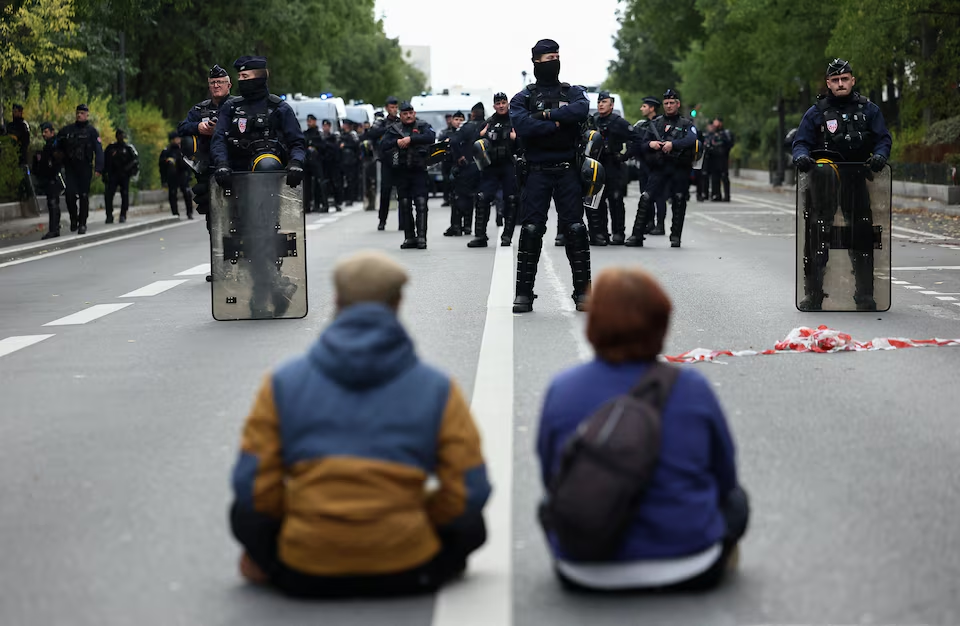
French President Emmanuel Macron is facing growing criticism over plans to limit some protests as workers, students and unions prepare for more demonstrations. The move comes after days of unrest linked to rising living costs, budget cuts and concerns about public services. Union leaders say tighter rules will not ease public anger and could deepen tensions across the country.
Macron was due to meet student representatives on Friday to discuss their plans. However, the National Union of Students of France, known as UNEF, said its planned rallies would go ahead. The protests grew out of high school demonstrations last month over teacher shortages and poor school facilities.
UNEF accused Macron of weakening the right to protest. In a statement, the union said his plans went against the values of the French Republic. Student groups have joined wider calls for better public services and more support for people facing rising costs.
France is still dealing with the effects of the worst violence seen in years. Last weekend, looting and riots took place on the edges of nationwide protests. The unrest led to a major police response and thousands of arrests. Overnight curfews in parts of Paris and other cities have since passed without major incidents.
Macron blamed far-left groups for helping fuel the unrest. He described them as seditious, but the France Unbowed party rejected the claims. On Thursday, Macron said protests he viewed as illegitimate would be banned in the coming days. He said rallies organised by trade unions could still take place, though officials might send them along different routes.
The plan has drawn criticism from union leaders. Marylise Leon, head of the CFDT, one of France’s largest trade unions, said the move would not restore calm. She argued that the government should respond to public anger with clear plans to address people’s concerns.
Speaking to French broadcaster TF1, Leon said many people wanted to be heard and taken seriously. She also questioned the president’s role in deciding which groups had a valid reason to protest. Her comments reflect wider concerns that limits on public rallies could make tensions worse rather than bring them under control.
Workers, students and other groups are protesting against budget cuts and calling for higher wages. Many households are struggling with high energy bills and the rising cost of daily needs. Protesters also say that public services are getting worse and need more support.
The government says it understands these concerns but must keep public spending under control. France faces rising borrowing costs, which leave it with less room to fund new plans. The challenge is to respond to public needs while keeping the country’s finances stable.
Authorities have also imposed limits on planned rallies in major cities. All protests scheduled for Saturday in Marseille and Lyon, France’s second- and third-largest cities, were banned, local officials said. The decisions came as police and public bodies prepared for the risk of more unrest.
Businesses and cultural sites are also taking steps to protect staff and visitors. The Marseille Chamber of Commerce urged local businesses to close on Saturday. Art Basel Paris said its art fair would remain closed throughout the weekend. The Louvre and the Fondation Louis Vuitton also planned to close on Saturday.
In Orleans, central France, officials were preparing for possible clashes as the far-right National Rally planned a party meeting. Thousands of people were expected to take part in counter-protests. The planned gathering added to concerns about public safety as rival groups prepared to assemble.
France’s interior ministry was due to announce its security plans later on Friday. Macron was also expected to hold a meeting on defence and security, alongside talks with student groups. The government faces pressure to prevent further violence while allowing lawful public gatherings.
Economic worries remain at the heart of the unrest. High energy costs, pressure on household budgets and concern over public services have angered workers and younger voters. Yet the government has limited funds to meet the demands.
Financial markets have added to the pressure. On Thursday, the extra return investors demanded to hold French government bonds over German bonds reached its highest level in 15 years. The rise showed growing concern about France’s financial outlook. Credit rating agency Moody’s was expected to announce a decision on France’s credit rating late on Friday.
The coming days will test the government’s ability to balance public safety, the right to protest and demands for economic support. Union leaders argue that clear action on wages and public services would do more to ease tensions than tighter limits on rallies. With demonstrations still planned and security measures increasing, France faces a difficult effort to restore calm.
