


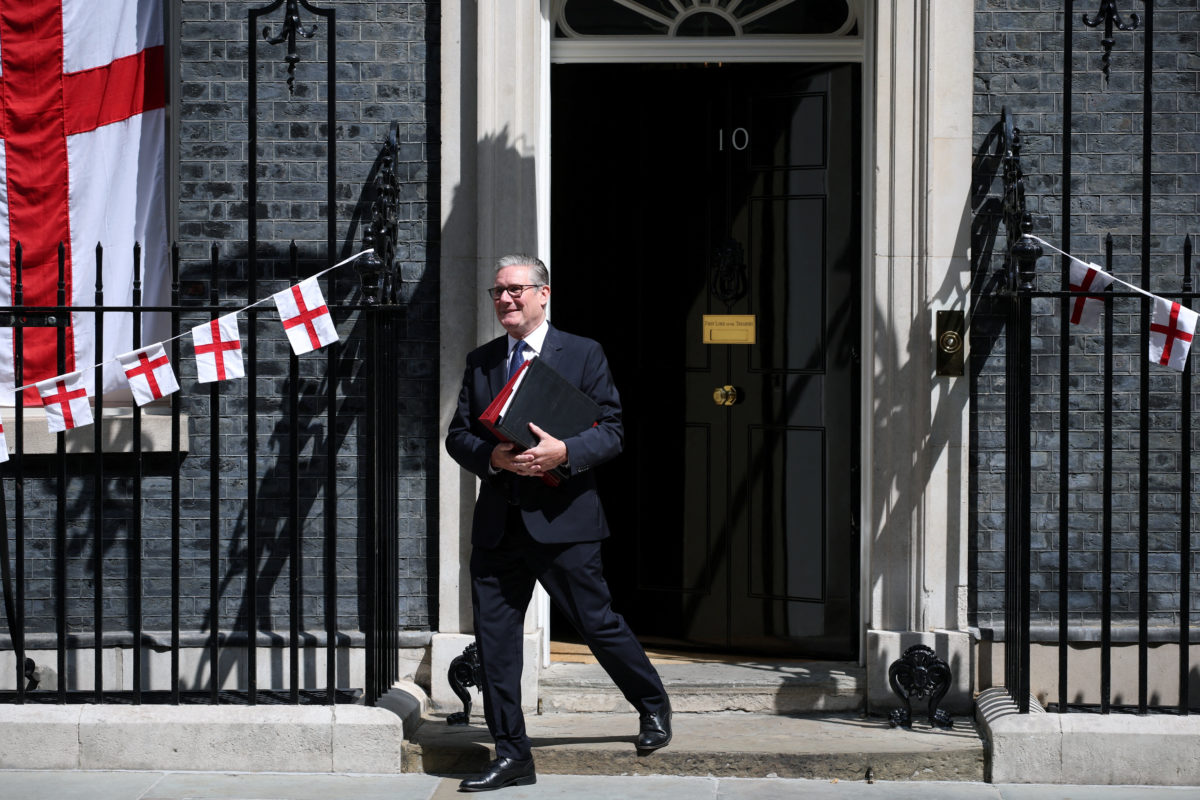
UK Prime Minister Keir Starmer delivered his final appearance at Prime Minister’s Questions (PMQs) on Wednesday, marking the end of his time as the country’s leader. Speaking before lawmakers in the House of Commons, Starmer said he was leaving Britain in “better shape than I found it” as he prepared to step down next week.
The session marked Starmer’s final weekly exchange with Members of Parliament before he officially leaves office. On Monday, he is expected to resign as prime minister after losing the support of his Labour Party. Labour is preparing to appoint a new leader, with Andy Burnham expected to succeed him after the party leadership process concludes.
Addressing Parliament, Starmer reflected on his years in politics and acknowledged that every prime minister eventually passes leadership to someone else. He described the occasion as the end of his political journey while confirming that he plans to remain a Member of Parliament on the back benches after leaving the country’s highest office.
Starmer served as leader of the Labour Party for six years and spent the last two years as prime minister. His government came to power after a decisive election victory in 2024, promising economic growth, improved public services, and support for working families.
Prime Minister’s Questions is one of the most closely watched events in British politics. Each week, the prime minister answers questions from opposition leaders and other lawmakers without advance notice of the topics. The session often features sharp political exchanges and is considered an important test of leadership and communication.
Unlike many previous appearances, Wednesday’s session had a more reflective atmosphere. Members from different political parties offered criticism, praise, and personal tributes as Starmer prepared to leave office.
During his opening remarks, Starmer spoke about the recent killing of former lawmaker Ann Widdecombe. He described the incident as deeply disturbing and urged politicians to work together to protect democracy and public service. He noted that several current and former members of Parliament have lost their lives during his years in office and called for continued efforts to improve the safety of elected representatives.
The prime minister also added a lighter moment to the session by mentioning that he planned to watch England’s World Cup semifinal later that day. His comment drew smiles from lawmakers as Parliament briefly turned its attention from politics to football.
Conservative Party leader Kemi Badenoch used the debate to remind Labour that changing party leaders does not automatically solve political challenges. She noted that leadership changes have become common in recent years and suggested that every government continues to face difficult decisions regardless of who is in charge.
Starmer came to office following a landslide election victory, but his popularity declined during his two years as prime minister. His government faced pressure over economic growth, the rising cost of living, and the condition of public services. Political controversies and internal disagreements within Labour also weakened support for his leadership.
After Labour performed poorly in local elections earlier this year, pressure increased for Starmer to step aside. He later confirmed that he would resign, allowing the party to choose a new leader before the next general election.
Despite domestic political difficulties, Starmer received recognition for his work on international affairs. His government strengthened relations with European partners following Brexit and played a leading role in supporting Ukraine during the ongoing conflict with Russia.
Earlier this week, Starmer attended Bastille Day celebrations in Paris with French President Emmanuel Macron, where he received the Legion of Honor in recognition of efforts to strengthen European security cooperation.
During his final Commons appearance, Starmer highlighted several achievements of his government. He pointed to stronger workplace protections, measures aimed at reducing child poverty, legislation designed to improve public accountability, and increased defense spending. He said these policies reflected his commitment to improving life across the United Kingdom.
As the session came to a close, Starmer thanked fellow lawmakers, parliamentary staff, civil servants, and members of the public who inspired him throughout his political career. He also expressed his love to his wife, Victoria, and their two children, who watched from the public gallery.
Lawmakers from across the House stood in recognition as Starmer concluded with a simple farewell. Although applause is traditionally discouraged in the House of Commons, many members rose to acknowledge the end of his time as prime minister, bringing his final parliamentary appearance to a memorable close.
