


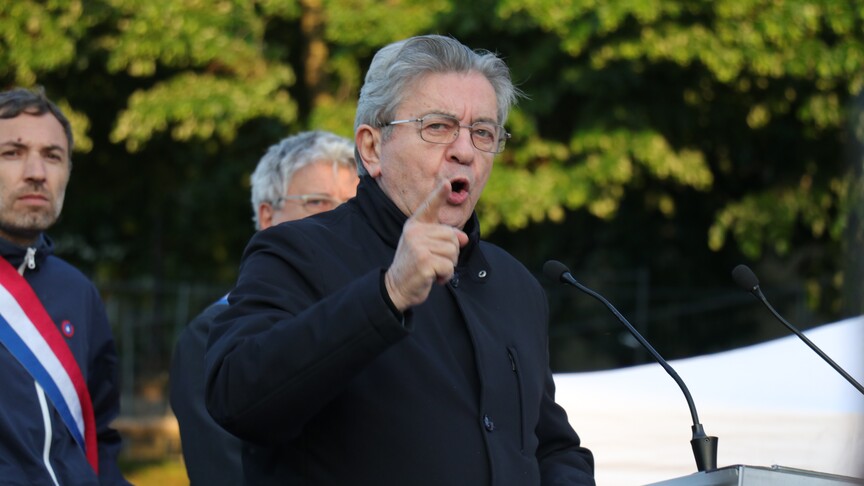
Jean-Luc Mélenchon has said that France would withdraw from NATO if he becomes president, arguing that the military alliance mainly serves the United States interests.
Speaking in an interview with French media outlet LCI, Mélenchon said the alliance places Europe under US influence and limits France’s strategic independence.
He stated clearly that a future presidency under his leadership would lead France to exit NATO, saying the organization “serves only one thing: placing us under the supervision of the United States.”
Mélenchon is the founder of the left-wing political movement La France Insoumise, also known as France Unbowed. He has long been a critic of NATO and has repeatedly called for France to take a more independent military position.
He said his plan would follow France’s historical approach to military independence, referencing earlier decisions made during the Cold War era.
Mélenchon pointed to former French President Charles de Gaulle, who removed France from NATO’s integrated military command in the 1960s to assert national sovereignty over defense policy.
He also criticized the 2009 decision by former President Nicolas Sarkozy to reintegrate France fully into NATO’s command structure.
According to Mélenchon, restoring independence in defense policy would require a gradual withdrawal process rather than an immediate exit.
He said France would first leave NATO’s integrated military command and then reduce cooperation in joint military programs involving the United States.
His comments reflect a long-standing political debate in France about the country’s role in NATO and its relationship with US-led defense strategy.
Mélenchon argued that European countries should have more control over their own security decisions instead of relying heavily on American military leadership.
The remarks come at a time when NATO has faced increased scrutiny across Europe due to rising geopolitical tensions and ongoing conflicts involving Russia and Ukraine.
European leaders have been debating defense spending levels and the extent to which the continent should rely on US security guarantees.
Supporters of a more independent European defense strategy argue that the region should strengthen its own military capabilities to reduce dependence on external powers.
Critics of NATO, including Mélenchon, believe that deeper integration within the alliance limits national sovereignty and pulls European countries into conflicts driven by US foreign policy interests.
However, supporters of NATO argue that the alliance remains essential for European security and collective defense, especially in the face of modern global threats.
France remains one of NATO’s key member states and plays an important role in the alliance’s military structure and decision-making processes.
Any potential withdrawal would represent a major shift in European security policy and could have wide-reaching consequences for defense cooperation across the continent.
Mélenchon’s statement is likely to become a central talking point in future political debates in France, particularly as discussions continue over defense strategy, military spending, and the country’s role in global alliances.
