


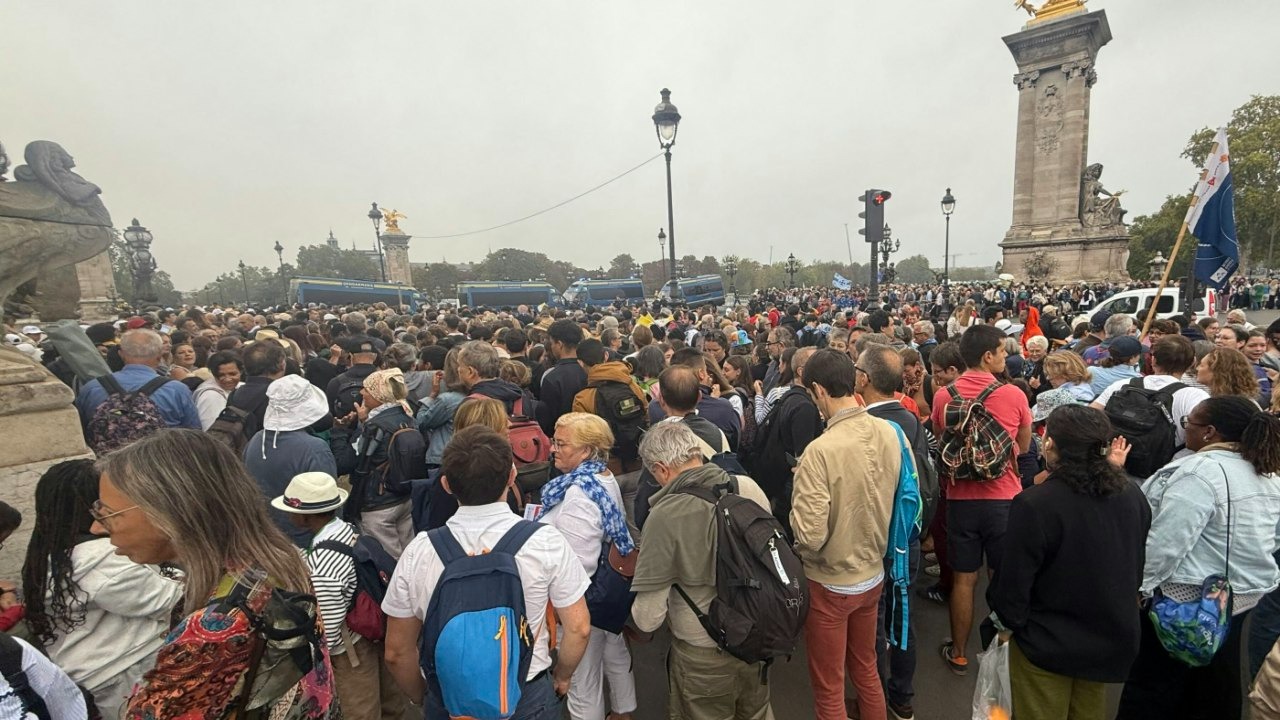
Paris is dealing with the effects of a huge public gathering following Pope Leo XIV’s events in the French capital. The Pope held a major outdoor Mass on September 26, attracting hundreds of thousands of people to the Place de la Concorde and the Champs-Élysées. The Vatican estimated that around 700,000 people attended, making the event one of the biggest public gatherings of his four-day visit to France. Reports about the event continued to emerge on September 27 as the Pope moved to Lourdes.
The huge crowd required extensive preparation from Paris authorities. Roads around the centre of the city were restricted, public transport arrangements were changed and security teams were deployed across areas used by visitors. The large number of people also affected normal weekend movement through central Paris.
The Pope’s September 26 programme began with a visit to the Maison Bakhita, followed by a meeting at the Catholic Institute of Paris. He then travelled to the Place de la Concorde for the major Mass. The event attracted people from France and other countries who wanted to see the Pope during his first official visit to France.
The gathering was especially significant because Pope Leo’s visit is the first official papal visit to France in almost two decades. The programme has included religious ceremonies, meetings with political leaders and encounters with young people.
Paris also experienced a major youth event during the Pope’s first day in France. A prayer vigil at the Stade de France brought together a very large number of young people. The event formed part of the Pope’s effort to connect with younger Catholics and discuss their place in the Church and wider society.
The city’s cultural attractions were also affected by the visit. Several major locations were temporarily closed or placed under special access arrangements because of security requirements. Notre-Dame Cathedral, for example, was closed to visitors during part of the Pope’s Paris programme. The Arc de Triomphe and other cultural sites also faced temporary restrictions around the main events.
The effects of a gathering of this size extend beyond security. Hotels, restaurants and shops can experience changes in customer numbers when hundreds of thousands of visitors enter the city. Public transport also faces additional pressure as visitors move toward event locations and later leave at the same time.
For local residents, however, major religious events can also create inconvenience. Road closures can increase travel times, while crowded stations can make normal weekend journeys more difficult. Authorities therefore need to balance the needs of visitors with the daily activities of people who live and work in the city.
The Pope’s departure from Paris on Saturday evening reduced the immediate pressure on the French capital. He travelled to Lourdes for the next stage of his visit. On Sunday, he is scheduled to celebrate Mass at the Sanctuary of Our Lady of Lourdes before taking part in an evening prayer and torchlight procession.
The Paris events nevertheless remain a major part of the Pope’s French visit. The attendance figure shows the scale of public interest, while the security and transport arrangements demonstrate the logistical challenge created by a major international religious event.
For Paris, the September 27 focus has shifted from the Pope’s physical presence to the aftermath of the huge Saturday gathering. Visitors are gradually returning to normal city activities, while authorities continue to manage transport and security around the wider weekend programme. The Pope’s trip will finish in Metz on September 28. Until then, France remains the centre of attention for a visit combining religion, public life, diplomacy and cultural discussion.
