


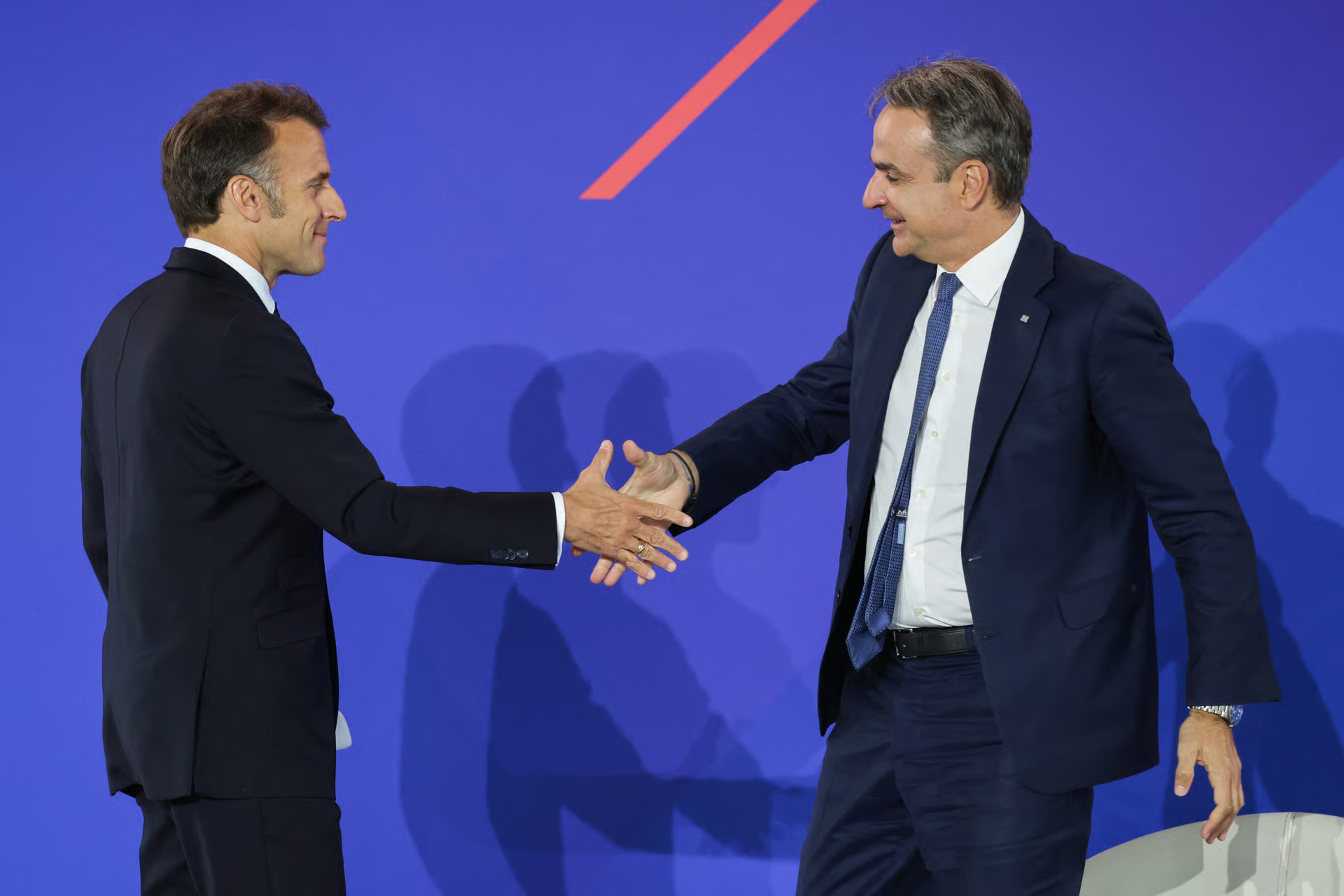
France Greece defense pact talks have led to a major new agreement between Paris and Athens, as both countries strengthen their security ties during a period of rising global tension. French President Emmanuel Macron and Greek Prime Minister Kyriakos Mitsotakis met in Athens on Saturday and pledged to support each other in case of military threats.
The France Greece defense pact includes a mutual assistance clause. This means both countries agree to help each other if one faces armed aggression. Macron said the commitment is strong and direct. He stated that France would stand with Greece in any security crisis. Mitsotakis also confirmed that France is a key ally of Greece and highlighted the importance of shared defense commitments.
The agreement was announced during Macron’s official visit to Athens. Both leaders signed a total of nine bilateral deals. These agreements cover defense, education, scientific research, and nuclear energy. The France Greece defense pact is part of a wider strategic partnership aimed at deepening cooperation between the two European nations.
Officials said the defense agreement will be automatically renewed after five years. This long-term structure is designed to ensure stability and continuity in military cooperation. It also signals a strong political message about unity within Europe at a time of global uncertainty.
During the joint press conference at the Maximos Mansion in Athens, Macron emphasized the strength of the partnership. He said France would always support Greece in the event of armed aggression. Mitsotakis responded by saying that the agreements reflect trust and shared responsibility between the two countries.
The France Greece defense pact also highlights cooperation beyond military support. The two governments agreed to expand collaboration in key sectors. These include education programs, scientific projects, and nuclear research. Officials say these areas will help strengthen long-term ties between the two countries.
As part of the visit, French defense company MBDA signed a contract to continue support for the Greek military. The agreement focuses on maintaining and upgrading Mica missile systems used by the Greek armed forces. This deal adds another layer to the growing defense cooperation between France and Greece.
Macron and Mitsotakis also discussed broader European security issues. They called for clearer rules on how the European Union’s mutual defense clause would work in practice. This clause, known as Article 42.7, states that EU members must assist a country that comes under attack.
However, both leaders stressed that EU defense cooperation should not replace NATO’s security guarantee. NATO’s Article 5 remains the main collective defense mechanism for many European countries. The France Greece defense pact is seen as complementary to these existing alliances rather than a replacement.
Earlier in the day, the two leaders visited the port of Piraeus. There, they inspected a Greek frigate built by French company Naval Group. The visit also included French Defense Minister Catherine Vautrin and Naval Group CEO Pierre-Eric Pommelet. The ship visit highlighted ongoing naval cooperation between the two countries.
The France Greece defense pact comes at a time of increased geopolitical tension in Europe and nearby regions. Governments across the continent are reviewing their security strategies and strengthening alliances. France and Greece have both supported deeper European defense cooperation in recent years.
Officials say the new agreements will improve military readiness and coordination between the two nations. They also aim to strengthen industrial cooperation in defense technology and equipment production.
For Greece, the partnership provides access to advanced military systems and stronger diplomatic backing. For France, it reinforces its role as a key security partner within the European Union.
The France Greece defense pact is expected to guide cooperation for years to come. It marks a significant step in building closer defense ties between the two countries. As global security challenges continue to evolve, both governments say they are committed to standing together and responding jointly to future threats.
