


France has launched a new seabed warfare observatory to study rising threats under the ocean, as concerns grow over the safety of critical undersea infrastructure. The initiative is led by the MFM research organisation, headed by retired French Navy Rear Admiral Jacques Mallard. It operates within the Toulon-based strategic think tank FMES, known for defence and security analysis.
The seabed warfare observatory will publish regular monitoring reports in 2026. A total of three reports are planned for the year. These reports will track developments in underwater security risks. They will focus mainly on threats to critical undersea infrastructure, often called CUI. This includes internet cables, communication lines, and energy connections that run across the ocean floor.
Each report, known as a monitoring note, will summarize key events within a set time period. The first edition covers January to March 2026. It also studies patterns and trends to support strategic decision-making. The goal is to help governments and security agencies understand risks more clearly.
The seabed warfare observatory highlights that the ocean floor is now a major strategic zone. It says global powers are showing increased interest in this area. It also warns that hybrid threats are becoming more common and harder to identify. These threats may include sabotage, covert operations, or damage to infrastructure without clear responsibility.
According to the report, the seabed is no longer just an economic space. It is also becoming an area of security concern. It involves issues of sovereignty, military freedom, and global communication security. The observatory says this combination makes it a sensitive and high-risk environment.
The first monitoring note points to several recent incidents in Europe. It highlights repeated damage to undersea cables in the Baltic Sea region. On 30 December 2025, an internet cable between Estonia and Sweden was damaged. The next day, a cargo ship reportedly damaged another cable connecting Estonia and Finland. Finnish authorities suggested possible sabotage in that case.
On 2 January 2026, another cable between Latvia and Lithuania was cut. This incident led Latvia to open an official investigation. The seabed warfare observatory also noted suspicious ship activity near cable sites off the coasts of the United Kingdom and Portugal during early 2026.
The report says these events raise concerns about the protection of undersea networks. These systems are essential for internet communication, energy supply, and global data transfer. Damage to them can affect millions of people and disrupt international services.
The seabed warfare observatory also examines how European countries are responding. Northern European states are increasing surveillance and cooperation. Finland has built a new monitoring system in the northern Baltic Sea. It uses artificial intelligence to link regional hubs and share real-time security data.
Ireland has also increased cooperation with France, the United Kingdom, the European Union, and NATO. It has created a national maritime security centre to improve ocean monitoring and response capability. The report says these steps show a growing awareness of underwater threats.
The observatory describes this shift as a major change in security thinking. It says countries are now treating seabed risks as a serious defence issue. Governments are paying more attention to protecting underwater infrastructure from possible attacks or accidents.
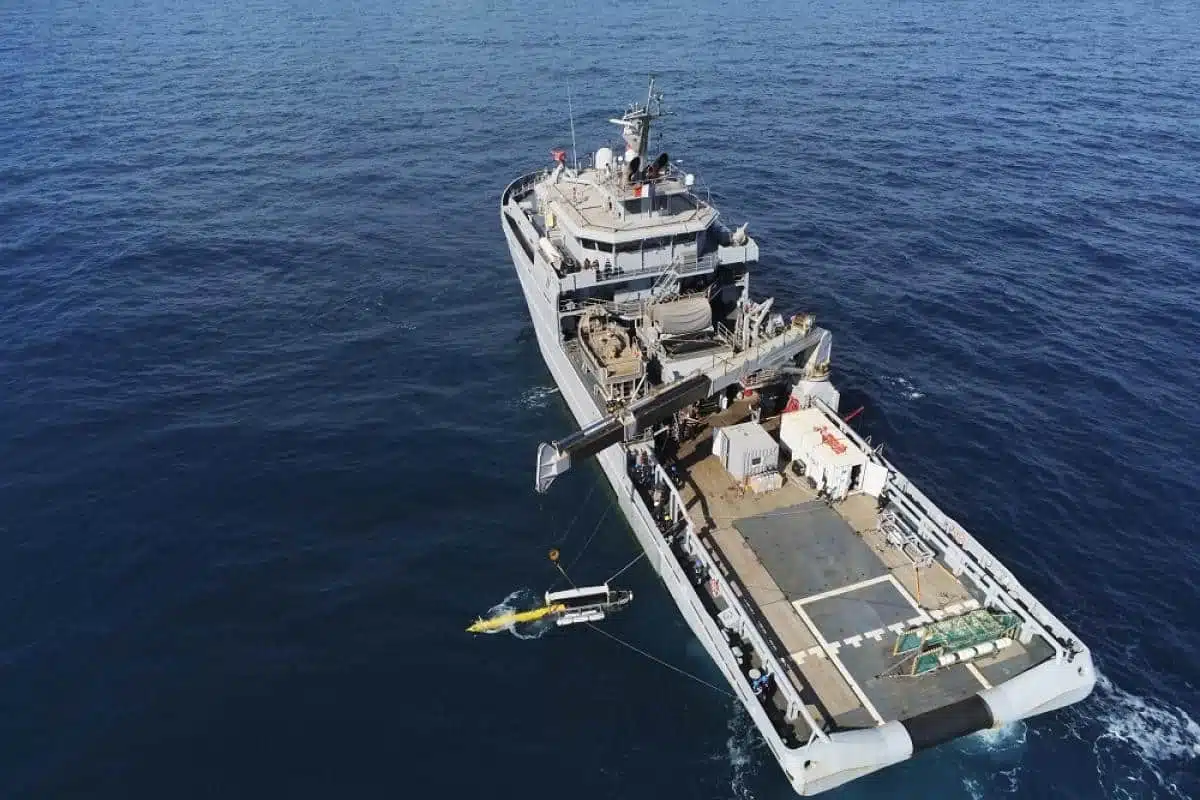
The French Navy plays an important role in these efforts. It is actively involved in NATO and European Union operations linked to seabed security. Through its “Calliope” mission, the navy is testing advanced technologies in French waters. These tests reach depths of up to 6,000 meters.
The aim is to improve underwater detection, monitoring, and response systems. The French Navy is also inspecting ships suspected of belonging to so-called shadow fleets. These vessels are believed to operate in unclear or covert ways and may be linked to infrastructure damage cases.
The seabed warfare observatory concludes that underwater security is becoming a key global challenge. It says rising geopolitical tension and technological change are making the deep sea more vulnerable. At the same time, it warns that attribution of responsibility remains difficult, which complicates response efforts.
As countries expand their monitoring systems, the observatory says cooperation will be essential. It believes future security will depend on stronger surveillance, shared intelligence, and better protection of underwater networks that support modern life.
