


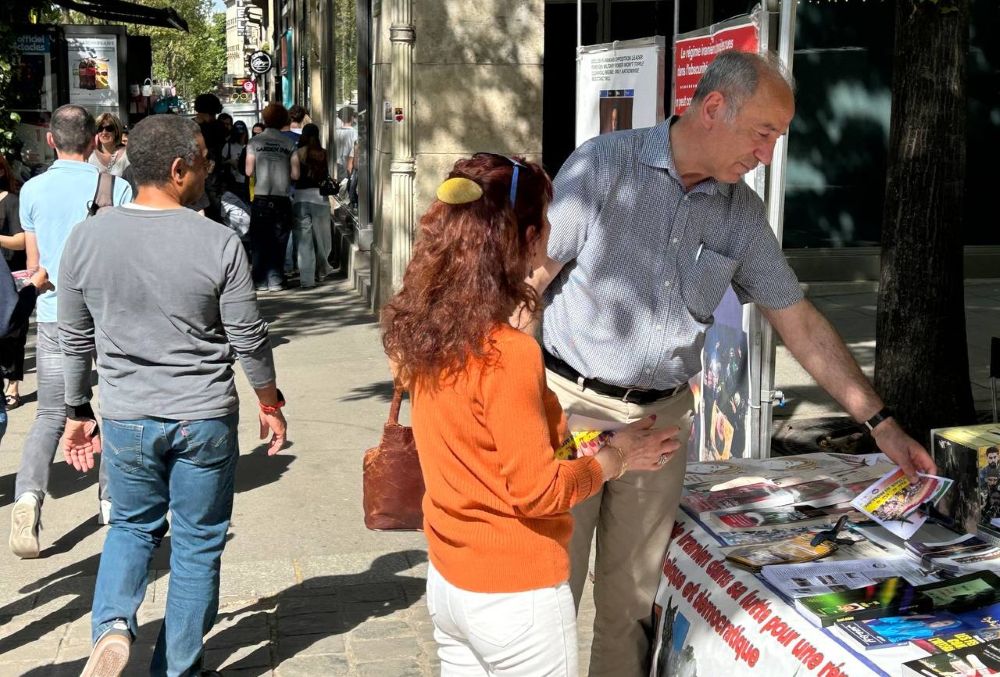
A public exhibition and book stall held in Paris has brought renewed international attention to Iran political prisoners and the wider human rights situation in the country. The event was organized by the People’s Mojahedin Organization of Iran, also known as PMOI or MEK. It focused on honoring prisoners who were executed by Iranian authorities, as well as people killed during recent protests.
The exhibition also highlighted victims of the January 2026 protests in Iran. Organizers said the event was meant to remember those who lost their lives during nationwide unrest. They also used the platform to call for major political change in Iran.
At the center of the event was a strong message. Organizers said they support the creation of a democratic republic in Iran. They described this as the only path toward long-term peace, freedom, and stability. The message rejected both monarchy and the current religious political system.
The display included photographs, books, and personal stories. These materials showed images of protesters, political prisoners, and families affected by state violence. According to organizers, the aim was to show the human cost of political repression in Iran.
The event placed strong focus on Iran political prisoners who were executed in recent years. Organizers said these individuals were punished for their political beliefs or activism. They described the executions as part of a wider pattern of human rights violations.
Supporters at the exhibition said the Iranian people continue to demand freedom and democratic governance. They argued that protests in 2026 showed ongoing public frustration with the political system. They also said many people are still facing arrest, detention, and harsh treatment.
Organizers used the event to call on the international community to take a stronger stance. They urged foreign governments and the public not to support any form of dictatorship in Iran. Instead, they asked for support for democratic change led by Iranian opposition groups.
The message of the exhibition was centered on solidarity. Speakers called on visitors and supporters in France to recognize the suffering of ordinary Iranians. They said global awareness is important in pressuring authorities to respect human rights.
The event also promoted a large rally planned for June 20 in Paris. The rally will be held under the slogan “A Democratic Republic for Iran.” Organizers said the rally will bring together supporters of political reform and opposition groups from outside Iran.
According to the organizers, the goal is to build international support for change in Iran’s political system. They believe that global attention can help highlight the situation of Iran political prisoners and other victims of state action.
The exhibition also stressed rejection of all forms of dictatorship. Organizers said Iran has experienced both monarchical rule in the past and the current theocratic system. They argued that neither system has delivered freedom or democratic rights.
Through visual displays and written testimonies, the event showed personal stories of people affected by imprisonment and political unrest. Many of the stories focused on families separated by detention or execution. Others described long-term imprisonment of activists and protesters.
Human rights issues were a key focus throughout the event. Organizers highlighted concerns such as executions, mass arrests, and restrictions on political freedom. They said these actions continue to affect many groups in Iran, including activists, students, and minority communities.
The exhibition also referenced broader protests across the country. These protests, according to organizers, reflect deep social and political dissatisfaction. They said the 2026 unrest is part of a longer pattern of demonstrations in Iran over recent years.
Supporters at the event said international silence or limited response is not enough. They called for stronger global engagement on human rights issues in Iran. They believe that visibility and pressure can contribute to political change.
The event in Paris ended with a renewed call for unity among supporters of Iranian democracy movements. Organizers said the struggle for rights and freedom continues both inside and outside Iran.
They also emphasized that the memory of those who died in protests and those who remain imprisoned should remain central to global discussions. According to them, Iran political prisoners represent a wider struggle for political freedom and human dignity.
As the exhibition closed, attention turned toward the upcoming rally. Organizers expect it to bring more visibility to their demands and to continue international discussion on Iran’s political future.
