


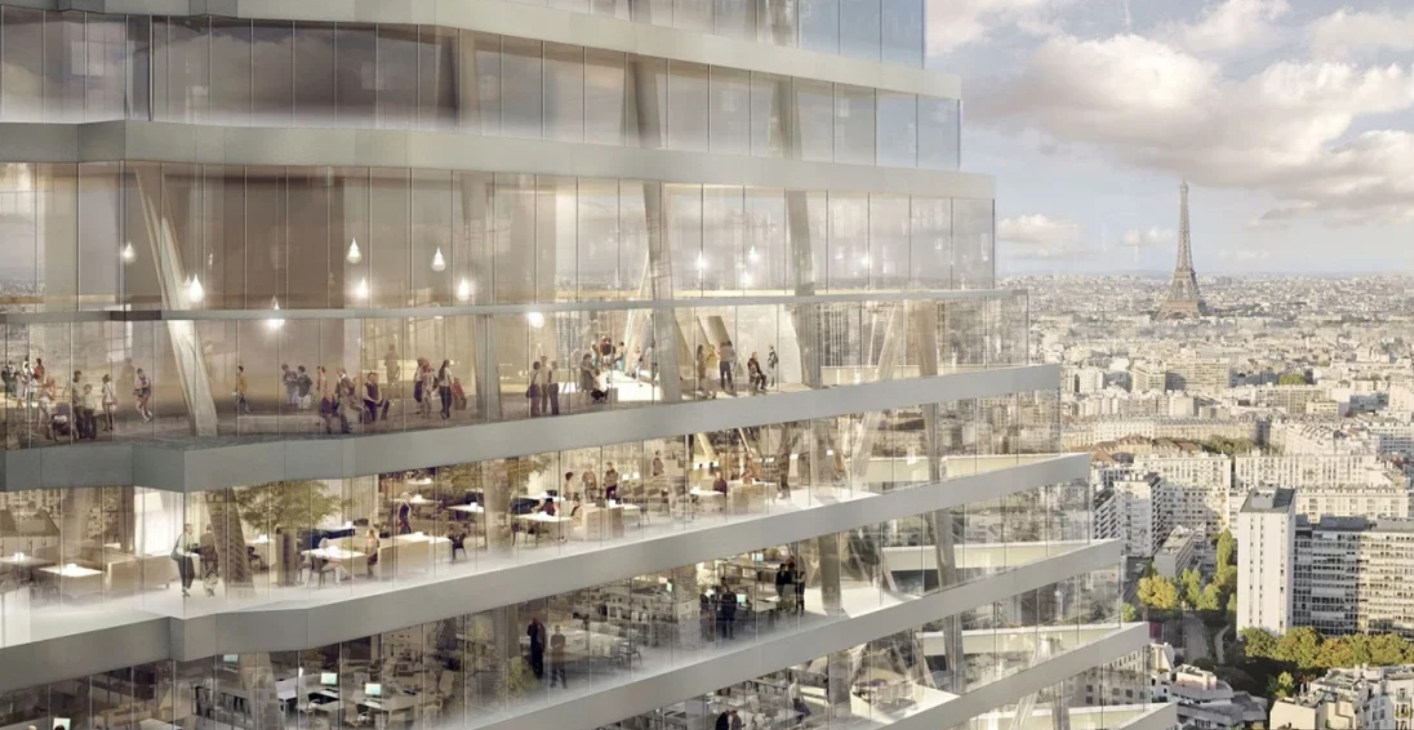
Paris is preparing to reshape its skyline as the long-debated Tour Triangle has officially reached a height of 180 meters, marking a major construction milestone after years of political debate and public controversy.
Located at Porte de Versailles in Paris’s 15th arrondissement, the 42-story glass tower is one of the most significant new developments in the French capital in decades. It is the first major skyscraper to rise within central Paris since the completion of the Montparnasse Tower in 1973.
The project was designed by Swiss architectural firm Herzog & de Meuron and is known for its distinctive triangular shape. Depending on the viewing angle, the building appears either as a slim glass blade or a wide pyramid-like structure, making it one of the most visually striking additions to the European skyline.
Construction of the Tour Triangle has faced a long and difficult path. The project was first proposed in 2008, but it quickly became a subject of political disagreement in Paris. City officials initially rejected it in 2014 due to concerns about its height and its impact on the historic cityscape.
Despite opposition, the project was approved in 2015 and later survived multiple legal challenges before construction officially began in 2022. The recent completion of its structural height marks a key step toward final delivery.
The tower is expected to open by the end of 2026 and will feature a mix of commercial and public spaces. Plans include office floors, a hotel, conference halls, retail shops, restaurants, and cultural areas. Developers also plan observation decks and immersive viewing experiences at the top of the building.
Some reports suggest that a panoramic attraction similar to New York’s Summit One Vanderbilt may be included, offering visitors wide views across Paris and its surrounding areas.
At 180 meters, Tour Triangle will become one of the tallest buildings in Paris, surpassed only by the Eiffel Tower and the Montparnasse Tower. Its height and design have made it a symbol of the ongoing debate over modern architecture in a city famous for its historic low-rise skyline.
Supporters of the project say it represents a necessary evolution for Paris as a global city. They argue that the new tower will help transform the Porte de Versailles district into a modern business and cultural hub, bringing new investment and activity to the area.
They also highlight the building’s focus on sustainability. The tower is designed to meet high environmental standards, using energy-efficient systems, large glass façades for natural lighting, geothermal technology, and reduced carbon emissions.
Critics, however, remain concerned that the tower changes the traditional character of Paris. They argue that high-rise buildings should not be expanded in the city center and warn that it could set a precedent for future skyscraper development in historically protected areas.
The debate reflects a broader tension in urban planning between preservation and modernization, particularly in cities with strong architectural identities like Paris.
Despite controversy, construction progress has continued steadily, and the recent milestone indicates the project is now approaching its final phase.
Once completed, Tour Triangle is expected to become a major landmark in Paris’s modern skyline and a focal point for discussions about the city’s future development.
As the structure nears completion, it remains both a symbol of architectural innovation and a point of contention in the ongoing debate over how much Paris should change its historic visual identity.
