


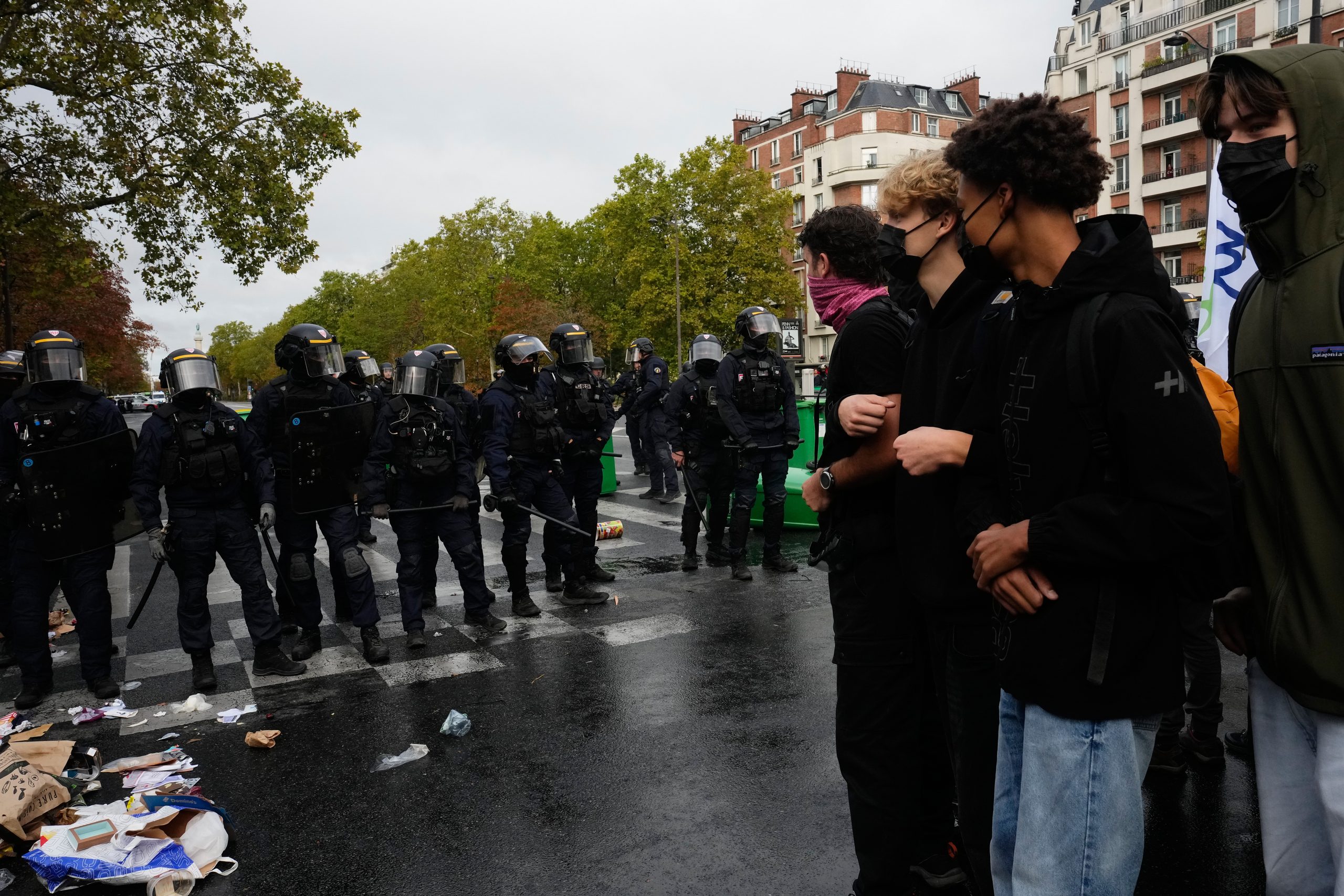
France is preparing for another tense weekend after officials warned that fresh demonstrations could bring further clashes between protesters and police. Interior Minister Laurent Nunez said on Monday, October 26, that planned protests on October 31 could become violent. The warning follows large demonstrations over living costs and public services on Saturday, when authorities deployed tens of thousands of police officers across the country. Although the security operation helped contain much of the unrest, sporadic violence still broke out in several cities.
The latest demonstrations began with concerns about education and the resources available to schools and universities. They later attracted a wider group of people who wanted action on living costs and public services. Trade union members and Yellow Vest activists also joined the wider protest movement. The growing range of demands has made the situation more difficult for the government, as anger is no longer limited to one group or one policy area. Officials must now prepare for gatherings that could attract people with different goals and levels of willingness to confront the authorities.
Police arrested 1,435 people during Saturday’s protests, according to the figures cited in the latest report. Violence was reported in Paris, Marseille, and Lyon, while officials also noted confrontations between far-right and far-left groups in cities including Nice and Montpellier. These incidents raised concern that demonstrations could involve clashes between opposing political groups as well as between protesters and police. Authorities are therefore preparing for a range of possible risks rather than focusing only on crowd control.
The government has also considered measures to prevent looting and damage to shops. Nunez said local curfews designed to reduce vandalism could remain in place where necessary. Businesses have already reported heavy losses after earlier unrest, with some retailers closing their doors and sales falling sharply. For shop owners, even a peaceful march can create uncertainty if customers avoid central areas or public transport is disrupted. A repeat of serious violence could deepen those financial effects.
The political response remains complicated. Officials want to restore calm, but the government also faces pressure to respond to the concerns that brought people into the streets. Education support, household expenses, and access to public services are issues that affect many families. Security measures may prevent damage, but they cannot by themselves settle arguments over government spending or living standards.
The authorities are expected to announce steps addressing student concerns about education and university admissions. The details will matter because protesters may judge the response by whether it changes conditions in practice, rather than by statements alone. The government must also consider its limited room for costly concessions as public finances remain under pressure.
As the next weekend approaches, police will be watching for signs of further unrest and possible confrontations between political groups. Protest organisers will face pressure to keep demonstrations peaceful, while the government will need to explain how it plans to address public concerns. France’s immediate challenge is to protect public safety without allowing the dispute to deepen further. The longer-term test will be whether officials can restore trust and create space for talks that lead to practical changes.
