


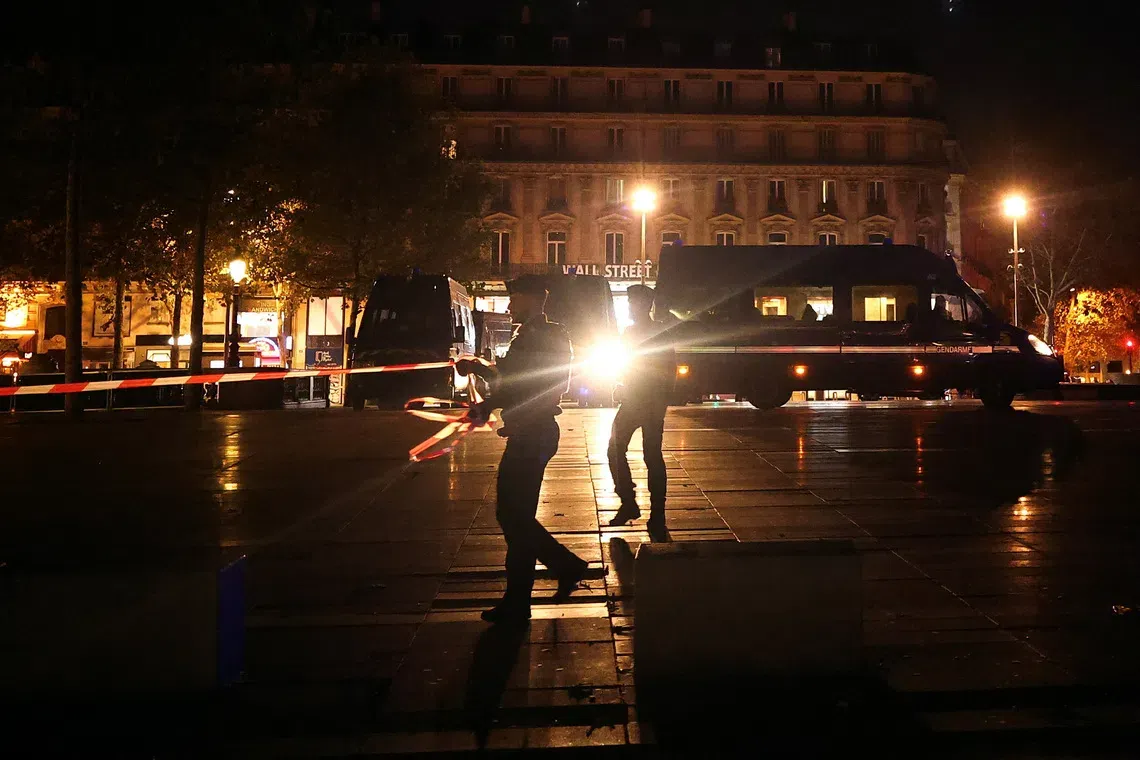
France has deployed about 70,000 police officers and gendarmes as the country prepares for a new round of protests on Saturday, October 24. The large security operation aims to prevent a repeat of the violence that shook Paris and other cities last week. Officials fear that new marches could again lead to clashes, damaged shops, and attacks on public buildings. The government says it will act firmly against anyone who takes part in violence or looting.
The latest protests follow demonstrations over living costs and poor conditions in schools. What began as public anger over these issues has grown into a wider political challenge for President Emmanuel Macron’s government. Many people have used marches to call for change, while others have raised concerns about the damage caused by violent groups. The authorities now face the task of protecting peaceful demonstrators while preventing unlawful acts.
Interior Minister Laurent Nuñez announced the security plan after warning that calls for violence and looting were circulating on social media. Police will be supported by helicopters, drones, water cannon, and armoured vehicles where needed. The deployment is intended to allow officers to respond quickly if trouble breaks out. Officials have also increased checks in areas where previous demonstrations led to serious disorder.
The scale of the response reflects the damage caused during the October 17 unrest. Reports said around 3,000 businesses were damaged or looted. Shopkeepers in several cities have taken steps to protect their premises, including placing boards over windows and moving items away from shopfronts. For many small businesses, another day of unrest could mean lost income, repair costs, and further uncertainty.
Paris has taken extra steps ahead of the new demonstrations. Several major museums, including the Louvre and the Musée d’Orsay, closed for the day as a safety measure. Public transport has also faced restrictions around parts of the city. These changes affect residents, workers, and visitors, but officials say they are needed to reduce risks in crowded areas.
The planned march in Paris has also caused a dispute between organisers and the police. Authorities withdrew approval for a route between Bastille and Nation and proposed an alternative path between Porte d’Italie and Porte de Vincennes. Organisers rejected the change and said they wanted to keep their original plan. The disagreement has raised questions about the right to protest and how public safety decisions should be made.
The government has called on people to protest peacefully and has warned that violent acts will not be tolerated. That message reflects a wider concern that clashes could harm public support for the issues behind the demonstrations. Residents who want better schools or help with living costs may find their concerns overshadowed if the day ends with damaged shops and injuries.
The political effects could also be significant. France is approaching the next presidential election, and security has become a central issue in public debate. Opposition parties have criticised the government and offered different approaches to policing, public services, and social support. The way the authorities manage the protests may shape how voters judge the government’s ability to maintain order.
The large deployment is meant to deter violence, but it cannot solve the causes of public anger on its own. The government must also respond to concerns about education, living costs, and trust in public institutions. A calm day would ease immediate pressure, while further violence could deepen the political crisis. France now faces a test of both public safety and its ability to protect peaceful protest.
