


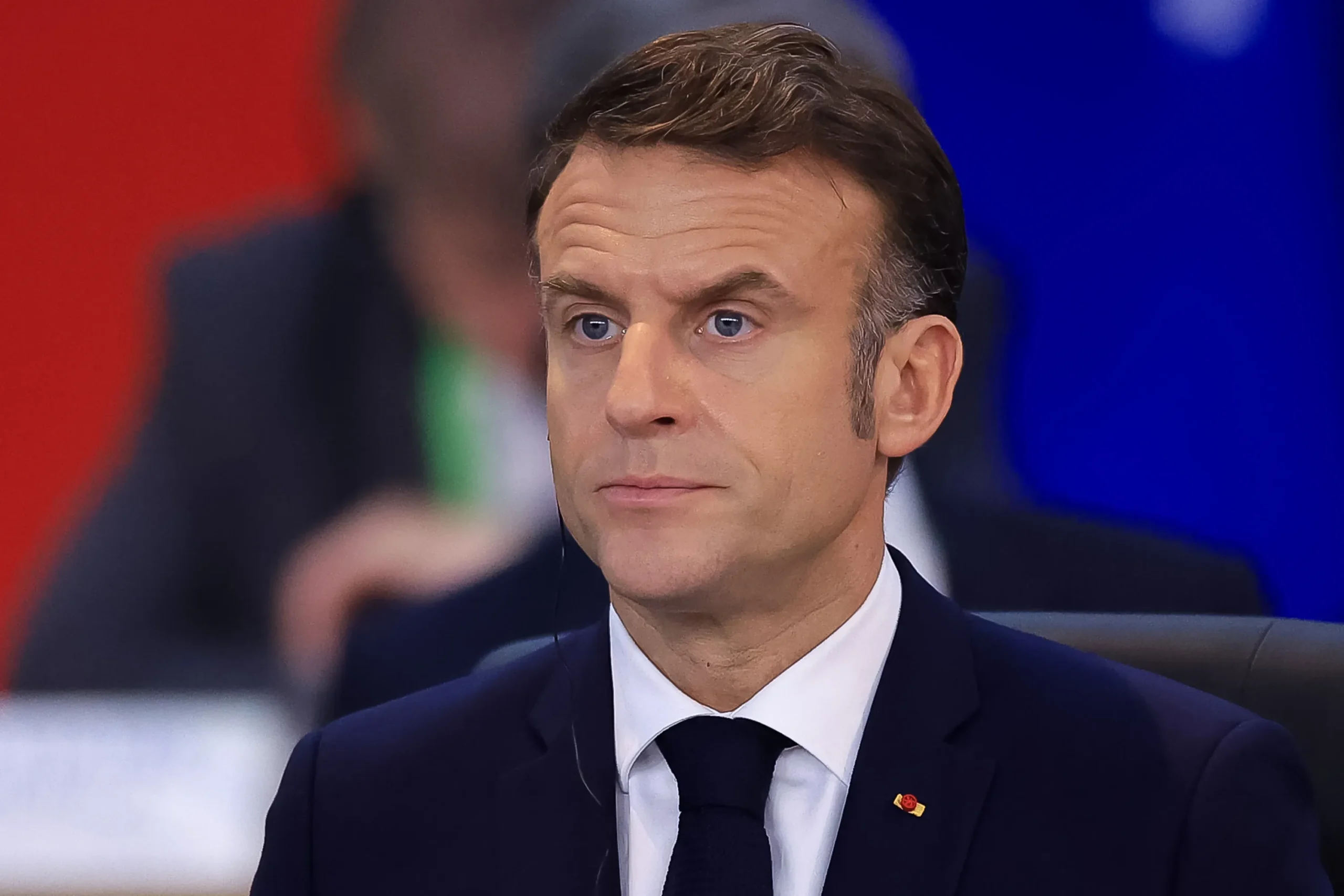
French President Emmanuel Macron has clashed with far-right leader Marine Le Pen over negotiations for the European Union’s next long-term budget, adding a new political dispute to an already difficult process. The disagreement emerged during the European summit in Brussels, where leaders discussed the bloc’s financial framework for 2028 to 2034. The negotiations involve major questions about spending priorities, support for poorer regions, agricultural funding, defence and Europe’s ability to compete economically with the United States and China.
Le Pen criticised the timing of the negotiations, arguing that European leaders were trying to reach an agreement before France holds its 2027 presidential election. She described the discussions as political manoeuvring and said they could limit the choices available to French voters. She has promised that, if elected president, she would reduce France’s contribution to the EU budget by half and end French military assistance to Ukraine. Macron rejected her criticism, arguing that she was acting as though she had already won an election that had not yet taken place.
The dispute reflects a deeper division among EU governments over how much money the bloc should spend and how that spending should be financed. Germany and several other countries want stricter limits on contributions and reductions across different budget areas. They oppose taking on more common debt and argue that national governments must remain careful about public spending. Other member states want to protect agricultural support and funding for less wealthy regions, saying that these investments help strengthen the entire European economy.
Germany has pushed for cuts of up to €250 billion from the proposed budget, which is worth around €2 trillion. Chancellor Friedrich Merz also wants to preserve Germany’s budget rebate and has questioned whether new European taxes would generate enough revenue. Macron, meanwhile, has argued against further reductions in funding for competitiveness and shared investment. He wants Europe to protect support for farmers, strengthen strategic industries and introduce a European preference in certain public investments, including military procurement.
The negotiations face a difficult deadline because Macron has said he will not make decisions after December 31 that would bind Europe for the next seven years so close to the French presidential election. If leaders fail to reach an agreement by then, talks could be delayed until the second half of 2027. Such a delay could create uncertainty for European funding programmes and support for Ukraine. The dispute therefore extends beyond France’s domestic election campaign, as the outcome will affect the financial direction of the entire European Union for years to come.
