


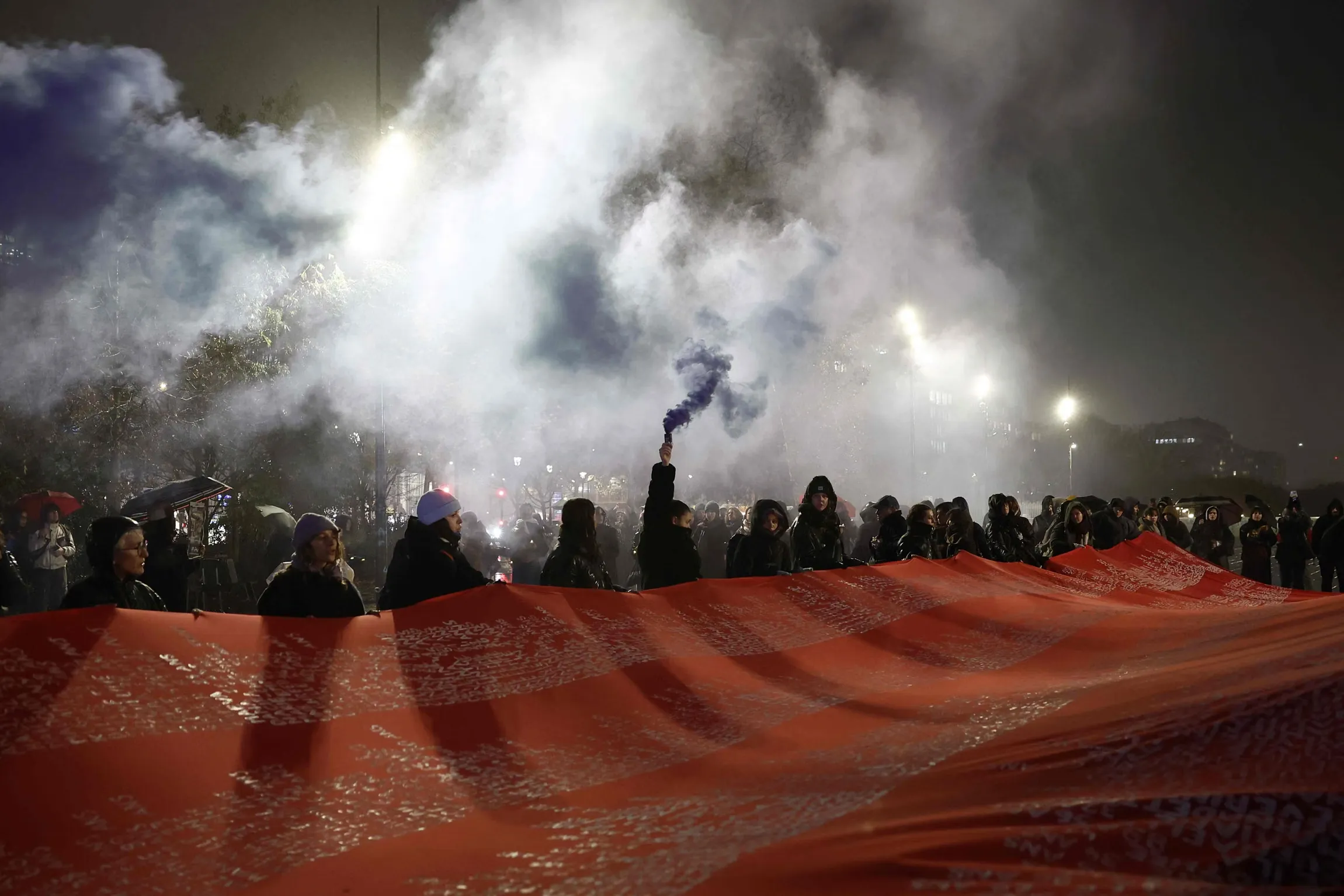
Feminist organisations in Paris are preparing to hold two separate demonstrations on November 28 to demand stronger action against violence towards women. The split marks an unusual moment for France’s feminist movement, which has generally tried to present a united front during annual demonstrations linked to the International Day for the Elimination of Violence Against Women. Although both groups share the goal of fighting gender-based violence, disagreements over legislation and political strategy have prevented them from organising a single march this year.
One demonstration has been organised by the Grève féministe coordination, which includes the National Federation for Women’s Solidarity, Osez le féminisme, the Women’s Foundation, the CGT trade union and other organisations. Its march is scheduled to begin at the Panthéon and continue towards Place d’Italie. The organisers want the government and lawmakers to strengthen protections for women and children and complete the legislative process for a comprehensive law against sexual and sexist violence. The proposal was adopted by the National Assembly in October and is expected to be examined by the Senate in January 2027.
The second demonstration is being organised by the Nous toutes collective, which has called on supporters to gather at Place de la République before marching towards Place de la Nation. It has received support from student organisations, non-governmental groups and feminist collectives, including organisations that describe their approach as intersectional. The group plans to highlight gender-based violence alongside social and state violence, placing greater emphasis on an anti-colonial and internationalist perspective. Some organisations have signed both calls, but the two routes reflect different priorities within the wider movement.
The disagreement is particularly clear over the proposed comprehensive law. Supporters of the legislation argue that it represents an important political response to years of campaigning and growing public concern about violence against women and children. They believe the law could create a stronger legal framework for addressing abuse and improving accountability. However, Nous toutes has criticised the proposal, arguing that a response based mainly on control, punishment and imprisonment is not enough to protect victims. The collective says effective protection also requires safe housing, accessible healthcare, social and legal assistance, prevention programmes and properly funded public services.
The divisions have become more visible ahead of France’s 2027 presidential election, when questions about women’s safety and public policy are likely to remain politically important. Both demonstrations are expected to attract people who want stronger action against violence, even though their demands differ. The separation also reflects wider debates within feminist organisations about how best to combine legal reform with social support and prevention. The marches will therefore provide a public display of both shared concerns and disagreements over the direction of France’s movement against violence towards women.
